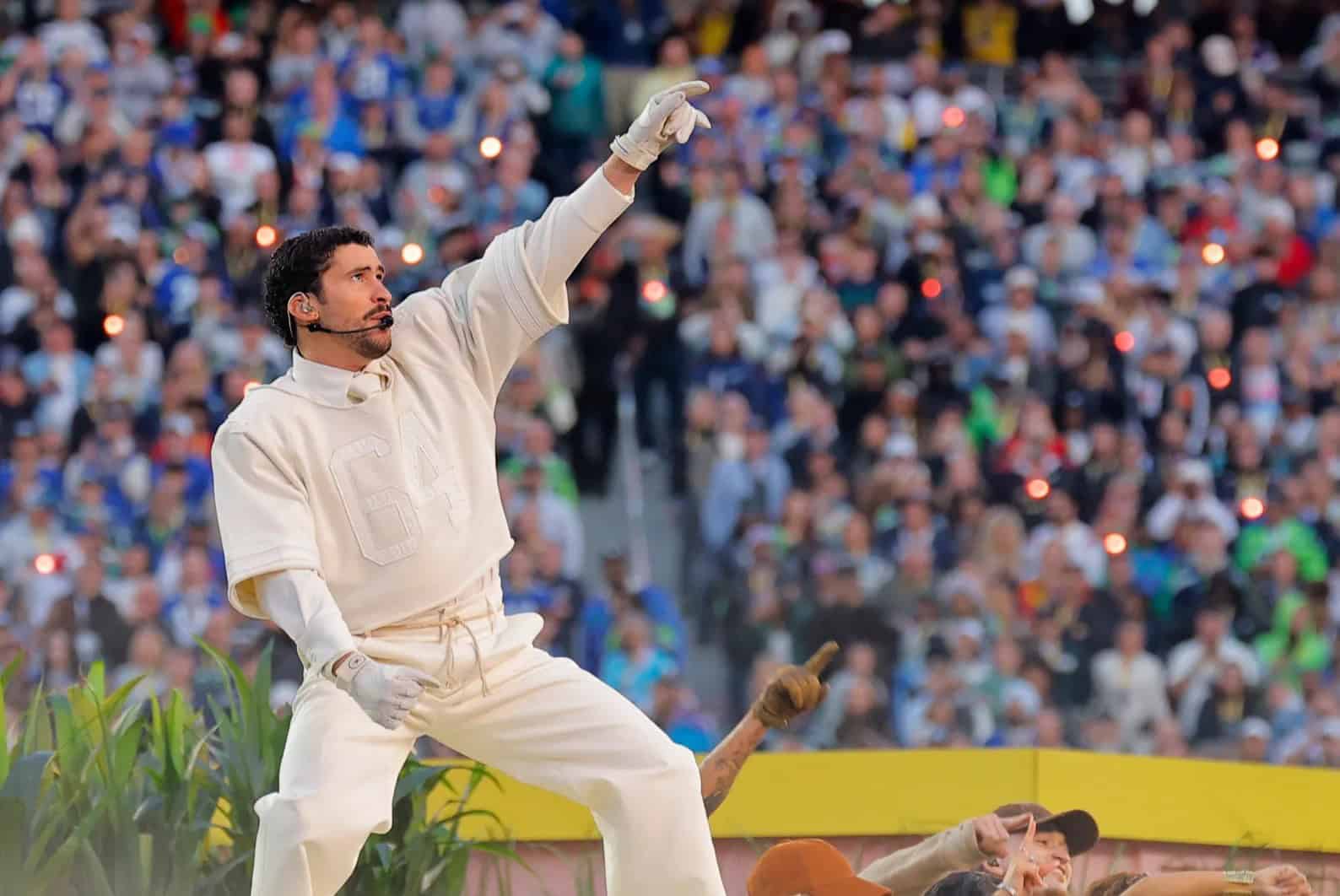
Watching Bad Bunny’s half-time show, I was struck by something that went far beyond performance. Before I was aware of it, before I could even think about it or attempt to make any sense of it, I realised that I felt deeply moved in a way that I struggled to put into words.
I seemed to feel it instinctually, in a way that my body understood before my head could catch up to it. Something in me had shifted; I felt invigorated, my skin vibrating, like a deep part of me, in watching it, unclenched. And with that release of tension came relief and delight!
I was watching a man, a crowd, a people come together and unapologetically showcase themselves – snapshots and moments of pure identity. It felt edgy, it felt defiant, but through it all was a joy centered in the uniqueness of that cultural experience. It was defined in itself, not in opposition to oppression.
And the joy expanded. I recognised some songs, though the language was alien to me – I’m a bigger Bad Bunny fan now than I was before – but it still hit. Something was being expressed that was more than words. Sure, I was missing nuance and context, but it felt inconsequential to the transfer of energy, emotion, and community. Community we were invited to participate in. Community as a verb.
And what became clear to me is that these weren’t just aesthetic choices for a performance – they were memories. They were the everyday intimacies of communities painted with the color, vitality, and depth of those inside them, in stark opposition to the flattened, criminalised, or erased narratives imposed from outside.
And out of nowhere, they became home:
- Men playing dominoes
- Sugarcane fields, the coconut water stand, and the shaved ice from the ice stand
- Kids sleeping on makeshift beds at family events and being woken up while adults continued to dance into the night
- Flags and shouts of the Americas, of the Caribbean, of carnival, and of my youth
I felt deeply connected to the shared roots between West African, Latino, and Caribbean cultures – the overlaps in rhythm, food, language, humor. And at the same time, I was aware of my own positionality as part of the diaspora: both inside this cultural expression and slightly outside it. Witness and kin. Neighbor and cousin.
All very familiar to me as a therapist of color, as a Black therapist in the UK – sitting on the boundary of difference, apartness, and belonging. Part of the aliveness of the work is in the simple ways I bring myself into the room and the act of resistance located in just ‘my being’ in a profession with too few identities like mine. And it was in this familiar feeling that I recognised what I was actually seeing – resistance through simple being, celebration, and joy. Visibility as protest.
In the current climate – with rising fascism, anti-immigration rhetoric, and growing hostility towards EDI work in both the UK and the US – this felt quietly radical.
Unapologetically loud and taking up space, but not didactic. Just joyful, ordinary, and unashamed presence.
It reminded me that culture is not just something we “celebrate” during heritage months. It is something we live, carry, protect, and pass down. And sometimes, choosing joy, visibility, and connection is the protest.
At Self Space, we often talk about mental health not just as an individual experience, but as something shaped by history, identity, and belonging. This moment felt like a reminder that collective joy can be regulating, that representation can be reparative, and that seeing yourself – and your neighbors – is honoring and meaningful.
Resistance doesn’t always look like slogans. Sometimes it looks like dominoes, shaved ice, and music that demands to be heard.